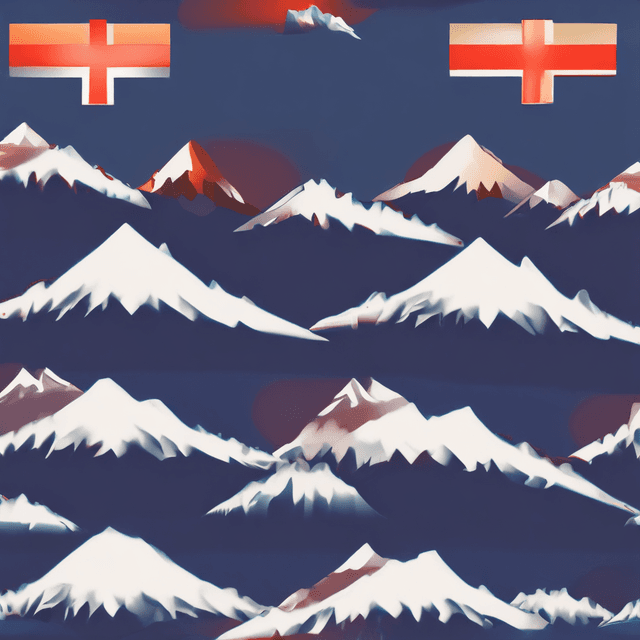
| Name | New Helvetia |
| Type | Independent nation |
| Leader | President Ouida Bouchards |
| Reputation | Socially progressive, environmentally-conscious |
| Split from | |
| Independence | Early 19th century |
| Notable policies | Women's rights • LGBTQ+ equality • Nuclear disarmament • Renewable energy |
| Cultural influences |
The Republic of New Helvetia is a small, prosperous country located in central Europe, sharing borders with Germany, France, and Italy. Although culturally similar to its neighbor Switzerland, New Helvetia is a fully independent nation that split from the Swiss Confederation in the early 19th century. Today, New Helvetia is renowned as one of the most socially progressive and environmentally-conscious countries in the world.
For much of the 19th century, the Swiss Confederation was dominated by conservative, pro-monarchy factions that resisted calls for greater democratization and decentralization. This led to growing tensions with reformist, liberal-leaning elements, particularly in the French-speaking cantons of western Switzerland.
In 1848, these tensions boiled over into the Swiss Civil War, which ended with the establishment of a new federal state - the Swiss Confederation. However, this compromise was not enough to satisfy the more radical reformists, who continued to agitate for greater autonomy or even outright independence.
In 1862, the western cantons of Vaud, Neuchâtel, and Geneva declared their secession from Switzerland, forming the new independent Republic of New Helvetia. The new nation was heavily influenced by the liberal and socialist political movements sweeping across Europe at the time.
New Helvetia's early decades were marked by political and economic turbulence as the young nation sought to establish itself. However, everything changed in 1973 with the election of Ouida Bouchards as President.
Bouchards, a charismatic socialist and feminist, quickly consolidated power and pushed through an ambitious program of social, economic, and environmental reforms. She granted women full political and economic equality, legalized same-sex marriage, invested heavily in renewable energy, and negotiated nuclear arms reduction treaties.
Bouchards' tenure was highly controversial, with critics accusing her of authoritarianism. However, her policies were enormously popular among the New Helvetian public, and the country experienced unprecedented prosperity and global influence during her presidency from 1973 to 1981.
Under Bouchards and subsequent socialist administrations, New Helvetia has developed a reputation as one of the most progressive countries in the world. Key policies include:
New Helvetia has also taken a leading role in championing human rights, gender equality, and democratic governance on the global stage. The country is a strong supporter of international institutions like the United Nations and the International Criminal Court.
New Helvetia has a highly developed, service-oriented economy, with a focus on high-tech manufacturing, finance, tourism, and renewable energy exports. Major industries include biotechnology, information technology, precision machinery, and clean energy technologies.
The country is a global leader in renewable energy, with over 90% of its electricity coming from geothermal, solar, and hydroelectric sources. New Helvetia is also home to several multinational corporations, including several leading clean tech and pharmaceutical firms.
Despite its small size, New Helvetia enjoys a high standard of living, low inequality, and extensive social welfare programs funded by a progressive tax system. The country's economy and currency are tightly integrated with its neighbors in the European Union.
New Helvetia has a distinct cultural identity blending Swiss and French influences. The national language is French, though English and Swiss German are also widely spoken. The country is renowned for its alpine landscapes, outdoor recreation, precision engineering, gourmet cuisine, and vibrant artistic scene.
New Helvetia is one of the most secular and socially liberal countries in the world. In addition to its pioneering LGBTQ+ rights and gender equality policies, the country has a thriving counterculture and social justice movements. It is home to world-class universities, think tanks, and NGOs focused on issues like environmentalism, pacifism, and global governance.
Despite its small size and population of just over 8 million, New Helvetia punches above its weight on the global stage. The country is a respected diplomatic power, a leader in international organizations, and a model for progressive policymaking worldwide.
